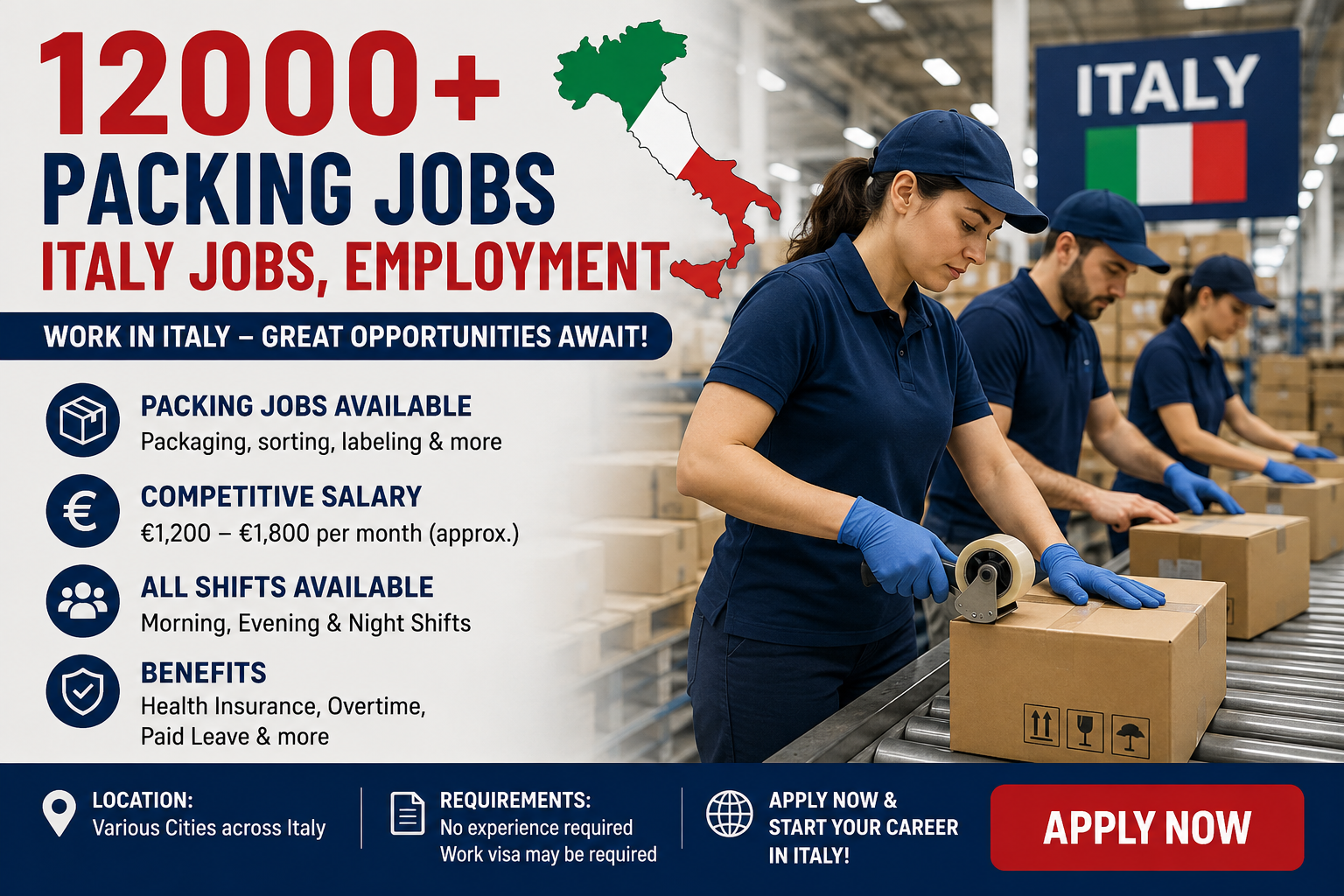
Packing jobs in Italy are among the most in-demand entry-level roles in the country right now, driven by growth in e-commerce, food production, and logistics. Whether you’re a local jobseeker or an international applicant considering a move, this guide breaks down what packing jobs actually involve, realistic pay ranges for 2026, the skills employers look for, and the legitimate channels to find and apply for openings — including what non-EU citizens need to know about work permits before applying.
This guide is based on current job board listings, Italian labour market data, and official EU employment resources, so you can set realistic expectations before applying.
What Does a Packing Job in Italy Involve?
Packing jobs generally involve preparing goods for storage, shipment, or retail display. Day-to-day tasks typically include:
- Sorting, wrapping, and labeling products
- Boxing items for shipment or export
- Weighing and quality-checking packed goods
- Scanning barcodes and updating inventory systems
- Operating basic packaging machinery
- Meeting daily production or shipping quotas
Most roles are physical and repetitive, based in warehouses, factories, or distribution centers, and are considered entry-level — meaning formal qualifications usually aren’t required.
Types of Packing Jobs Available in Italy
1. Food and Beverage Packing
Italy has the largest food processing industry in Europe, covering pasta, olive oil, wine, dairy, and confectionery. Packing roles here often involve hygiene-controlled environments and may require a basic food-safety induction (HACCP training), which many employers provide on the job.
2. Fashion and Luxury Goods Packing
Milan and the Veneto region are major hubs for fashion and luxury exports. Packing roles in this sector often demand more precision and care, since products are higher value and packaging quality affects the brand experience.
3. E-commerce and Warehouse Packing
Fulfillment centers for e-commerce and courier networks operate across northern Italy in particular. These roles are typically fast-paced, target-driven, and may include shift work, especially during peak shopping seasons.
4. Pharmaceutical and Cosmetics Packing
These roles usually involve stricter regulatory standards, cleanroom protocols, and closer supervision, but can offer more stable, long-term contracts compared to seasonal work.
5. Seasonal Agricultural Packing
Fruit, vegetable, and wine harvest packing is common in regions like Sicily, Puglia, and Tuscany. These jobs are usually short-term and tied to harvest seasons, often paid on a daily basis.
Packing Jobs in Italy: Salary Expectations for 2026
Pay varies significantly by sector, region, contract type, and experience. The figures below are general estimates gathered from job listings and salary data platforms — always confirm the exact figure with the employer before accepting an offer, since Italian pay is also governed by sector-specific collective bargaining agreements (CCNL).
| Role Type | Typical Monthly Pay (Gross) |
|---|---|
| Entry-level packing/warehouse worker | €1,200 – €1,700 |
| Experienced packing operator (1–3 years) | €1,600 – €2,100 |
| Pharmaceutical/regulated packing roles | €1,700 – €2,300 |
| Seasonal agricultural packing | €60 – €90 per day |
| Warehouse packing supervisor | €1,900 – €2,800+ |
Note: These are gross estimates before tax and social security deductions. Northern regions (Lombardy, Veneto, Emilia-Romagna) generally pay more than southern regions due to cost of living and industrial concentration.
Skills and Requirements for Packing Jobs in Italy
Most employers look for a combination of practical ability and reliability rather than formal credentials:
- Physical stamina — the role often involves standing, lifting, and repetitive motion for full shifts
- Attention to detail — accurate labeling and packing reduces returns and errors
- Basic numeracy — for counting stock and reading order sheets
- Reliability and punctuality — especially important in shift-based warehouse environments
- Teamwork — most packing lines operate in small crews with shared targets
- Machinery familiarity — a plus, not always required; training is often provided
A forklift certification (patentino carrelli elevatori) is not required for most packing roles but can help you qualify for higher-paying warehouse positions.
Do You Need to Speak Italian?
Basic Italian is helpful for understanding safety instructions and workplace communication, but many warehouses — particularly larger logistics operators with international staff — hire workers with limited Italian, especially for manual roles. That said, jobseekers who speak even conversational Italian will have access to a significantly wider range of openings and will find it easier to communicate with supervisors and colleagues.
Can Non-EU Citizens Apply for Packing Jobs in Italy?
This is one of the most common questions from international jobseekers, so it’s worth being precise about it.
- EU/EEA/Swiss citizens can live and work in Italy freely without a visa or work permit.
- Non-EU citizens generally need a job offer from an Italian employer and must go through Italy’s Decreto Flussi quota system, which sets an annual limit on work permits issued to non-EU nationals across different job categories, including manual and seasonal labor.
- Applications under the Decreto Flussi are employer-led — an individual cannot apply for the work permit on their own. The employer submits the request, and if approved, the worker then applies for the entry visa.
- Quota windows (“click days”) open on specific dates set by the Italian government, so timing matters if you’re applying through this route.
Be cautious of websites or agencies promising “guaranteed” or “free” visa sponsorship for packing jobs in exchange for a fee — legitimate employers do not typically charge candidates for visa sponsorship, and the process always runs through official government channels. For accurate, up-to-date rules, check the EURES living and working conditions page for Italy or Italy’s Ministry of Labour.
Where to Find Legitimate Packing Jobs in Italy
- Indeed Italy — a large aggregator of packing and warehouse listings updated daily
- EURES — the official EU job mobility portal, useful for cross-border applicants
- Subito.it and InfoJobs.it — popular local Italian job boards
- Staffing agencies such as Randstad Italia, Adecco, and Gi Group, which place large numbers of warehouse and packing workers on behalf of factories and logistics firms
- Direct employer career pages for major food, fashion, and logistics companies operating distribution centers in Italy
How to Apply: Step-by-Step
- Prepare a simple CV. Keep it to one page, listing any physical labor, warehouse, or factory experience, plus your availability.
- Write a short cover message. Mention your willingness to work shifts and your reliability — these matter more than formal qualifications for most packing roles.
- Apply directly through the employer or agency portal. Avoid third parties who ask for payment to “process” your application.
- Prepare required documents. If you’re a non-EU applicant, confirm with the employer early whether they are willing and able to sponsor a Decreto Flussi work permit.
- Follow up politely if you haven’t heard back within one to two weeks.
Frequently Asked Questions
Are packing jobs in Italy good for beginners with no experience?
Yes. Most packing roles are classified as entry-level, and employers typically provide on-the-job training for machinery and warehouse systems.
What is the average pay for packing jobs in Italy?
Entry-level packing and warehouse roles generally pay between €1,200 and €1,700 gross per month, with experienced workers and supervisors earning more. Seasonal agricultural packing is often paid daily.
Can I get a packing job in Italy without speaking Italian?
It’s possible, especially in larger logistics operations, but your options will be more limited, and basic Italian will help significantly with day-to-day communication.
Do employers in Italy sponsor visas for packing jobs?
Some do, through the Decreto Flussi quota system, but this depends on the employer, the annual quota, and timing. It is not guaranteed, and legitimate sponsorship never requires the applicant to pay a fee.
Is seasonal packing work in Italy worth it?
Seasonal agricultural packing can be a good short-term option, particularly during harvest periods, but it’s typically temporary and pay is lower than factory or warehouse roles.
Final Thoughts
Packing jobs in Italy remain accessible and steady sources of entry-level employment, particularly across food production, fashion, pharmaceuticals, and e-commerce logistics. Pay and conditions vary widely by sector and region, so it’s worth comparing a few listings before committing. If you’re applying from outside the EU, take the time to understand the Decreto Flussi process rather than relying on informal promises — going through official channels protects you from scams and gives you the clearest path to a legitimate job offer.
Disclaimer: Salary figures and visa information in this article are general estimates for informational purposes as of 2026 and can change. Always verify current details directly with employers and official Italian government sources before making employment or relocation decisions.